The Mysterious Mr Courtenay?

Prompted by the new #52Ancestors challenge for 2018, I decided to revisit one of my favourite brick wall ancestors, my second great grandfather (52Ancestors #3) Arthur or is it George?  Courtenay or Courtney?  He is the father of my mothers grandmother Abigail (Courtney) Roberts who was born in 1871 in Woolwich, Kent, England.  It was this mystery that got me ‘started’ in genetic genealogy.  In 2010, I thought I may have solved the mystery through traditional research and wanted to test my theory via DNA testing.  At the time, I had expected some instant ancestors.  How naive that was!  Nearly 8 years on and I am still no closer to identifying him.  You can read about my many possible theories on his profile at Wikitree.

Tree_Courtney-408 (1)

To access this tree at Wikitree, please click here.

Here are the facts.

The first record of Abigail’s father is found in the 1871 Census where the family was living at 14 Sun Street, Woolwich, Kent, England.  His name is recorded as Arthur G COURTENAY aged 30, born in Marylebone, Middlesex, England.  This suggests he was born in about 1841.  He is listed as the head of the family living there with wife Abigail (nee Paice), three daughters and a visitor nurse in attendance Ann Muggeridge who was also born in Marylebone, Middlesex, about 1821.  The census was taken on 2nd April 1871 and at that time he was unemployed, but his usual occupation was stated as a labourer in a brass works.

1871 England Census
1871 England Census

The three daughters present in 1871 are 3 month old twins Abigail and Alberta, plus older sister Edith aged 3.  Research suggests that Edith is an illegitimate daughter of his wife Abigail, born December 1867 so presumably from a previous relationship.

And who is Nurse Ann Muggeridge?  She holds particularly interest for me given she was born in the same place as Arthur G, could she be a relative of some kind, there to help with the newborn twins?

Both Abigail and Alberta’s births were registered on 28 April 1871 stated as being born on 26 Mar 1871, which is slightly inconsistent with being 3 months old on census night on 2 April 1871.  On the birth certificate their fathers name is recorded as George William COURTNEY, a silver and brass moulder.  Their mother Abigail was the informant, so it is perhaps more likely that this might be the correct name of their father.

Birth Certificate of Abigail 1871
Birth certificate of Abigail

The twins were baptised at St Mary Magdalene, Woolwich, Kent, England on 28th May 1871.  In this record the fathers name is once again stated as Arthur George COURTNEY, Brass Founder.

Baptism register for the twins Abigail and Alberta

Arthur is not found with his wife Abigail in any earlier or later censuses, or anywhere for that matter!  Nor can a marriage be found.  Neither Arthur nor Abigail senior nor Alberta can be found in the 1881 Census – where could they have gone?  In 1881 daughters Abigail and Edith are away at school in Holdenhurst, residing with a family named Brown.  By the time of the 1891 census Abigail is listed as a widow.  Had Arthur died or was this a way for Abigail to explain her circumstances having perhaps never married and then deserted?

1881 England Census
1881 England Census

The only remaining record is that of his daughter Abigail’s death in Australia in 1925, the information was provided by grandson James George Roberts so it may not be entirely accurate.  In this record Abigail’s father is recorded as being George Arthur COURTNEY, a civil engineer. No trace can be found of her twin Alberta, it is also unclear when/where she died.  Interestingly, both Abigail’s sons were given middle names from her father, did she know him during her life?

Death Certificate of Abigail Roberts (nee Courtney)

So is he George or Arthur, or even possibly William?  Is his surname Courtenay or Courtney?  For the purposes of the rest of this post, I plan to call him ‘George’.

Other anecdotal evidence from family stories may be relevant, or not?

  • My grandfather Edward Arthur Roberts states in his memoirs that his mother had some Irish in her make up which is presumed to have been a reference to her paternal line – could George have been of Irish descent?
  • My grandmother, Mona (Murphy) Roberts when asked by her children where in the South of Ireland their ancestors came from, the response was ‘Waterford and Wexford’.  Her ancestors – the Murphys, came from Wexford.  Could it be the Courtenay’s on their fathers side that came from Waterford?
  • My mother always said that the Courtney’s were talked about as being a bit ‘better’.  Did that mean more educated and upper crust?  Could they have been gentry of some sort?  Could Arthur George ‘COURTENAY’ – the name originally listed in the 1871 census, somehow be connected to the Courtenay’s of Devon or perhaps the Courtenay’s of Ballytransey, Cork?

DNA Testing Possibilities

YDNA – In the 1891 England Census, Georges wife Abigail is recorded as living with her grandson Albert COURTNEY aged 4.   I lived in hope for many years that this might also be a grandchild of George and that a YDNA test by a male descendant might be possible.  Unfortunately, Albert Edward COURTNEY was found to be the illegitimate son of Edith Courtney, the half sister of twins Abigail and Alberta.  As such he would only share DNA with ancestors of their mother Abigail Paice, not George Courtney.  Tragically, Albert died on 12 Oct 1918 in Syria World War 1, leaving no descendants.  I know of no other Courtney direct line male descendants.

mtDNA – As we don’t know anything about George’s siblings or parents we have no potential testers for a mitochondrial DNA test – yet!

atDNA – Since my initial test in 2010 there are now 7 descendants of George and Abigail who have taken autosomal DNA tests.  To date, only the ancestry of Abigail’s mother has been able to be confirmed.  Three of George’s great grandchildren, the ROBERTS siblings, have now been tested enabling the technique of Visual Phasing to be employed.  This method is being utilised to identify all the chromosomal segments that were inherited from Georges’s daughter Abigail Courtney and provides the best hope for tracing his origins in the future.

The Most Promising DNA match so far

Two first cousins, Sharon and Jon, whose shared ancestors are William Thomas FOSTER and Ivy Thomas WESTON share DNA with my family on a number of chromosomes, including chromosomes 4, 5, 9, 10 plus the X chromosome.  It is disappointing that no one in my family triangulates with both cousins on the same segment, however all our matches are in segment areas where these two cousins don’t share any DNA, so it is entirely possible that due to the random nature of DNA inheritance that these segments could still all have be inherited from the same common ancestor.

The Roberts siblings only have one paternal 1st cousin once removed who has tested that could have inherited Courtney DNA.  He does match Sharon on chromosome 9, but we currently have no way of confirming which of the paternal lines they match on.  Jon however matches my mother on the X chromosome.  Visual Phasing of the X chromosome confirms that the segment shared with the Jon was inherited from George’s daughter Abigail Courtney.  Due to the unique inheritance characteristics of the X chromosome, Jon could only have inherited the segment from a limited number of his maternal ancestors.

McLellan Jon

After some initial research, imagine my surprise when Sharon and I found Ann Muggeridge the nurse in attendance in 1871 (nee Webster, aka Ann Rudd), in Jon’s direct X chromosome inheritance path!  Surely, Ann must be a relative of some kind?  I’ve tried to contact other matches who triangulate on these segments, but there aren’t many and those who do either don’t reply or don’t know much about their ancestry.  Sigh, how disappointing!

If there is anyone out there who knows more about Ann or her relatives, and/or any possible connections to my George Courtney, I would love to hear from you!

Traditional Research Theories

As always, I am continuing to pursue possible theories associated with traditional genealogical research.  Whilst back in 2010 I was convinced that George Courtney of Shoreham, Sussex was my ancestor, today I am not so sure.   The following leads seem more likely – what do you think?

  • Henry Courtney – In 1881 George’s daughter Abigail and her half sister Edith are found living with William BROWN in Holdenhurst, Hampshire, England  It is unclear where her parents and twin sister Alberta have gone, as none can be found in the 1881 census.  In the small village of Holdenhurst there is a family of older female Courtney’s living there is 1881.  Could these be relatives of some kind?  These females are of the age to possibly be aunts of George.  Their heritage is traced back to Ireland to parents Henry Courtney and Sydney Gosselin from Dublin, Ireland. Henry’s mother was Anna Marie D’Olier.  The D’Olier family are known Huguenot emigrants to Ireland and one of their ancestors was said to have been imprisoned in France during the French Revolution.  My grandfather Edward Arthur Roberts was well known for his story that one of his ancestors was imprisoned during that time, a story that was often treated with much chagrin from his children, suggesting it was more likely that his ancestors were one of Madame Defarge’s compatriots!  Could there be some truth in this story?
  • George Courtney– this George was born in Middlesex in 1843, he is married to a woman named Sarah, living in Staffordshire and working as a brass dresser in 1881.  Could this be him?  Could he be connected to Henry in some way?
  • Of course, there is also still George Courtney from Shoreham Sussex born 1842, who was my original suspect due to a range of circumstantial evidence.

This photo is believed to be George’s daughter Abigail Courtney at school in England.  Could it have been taken in Holdenhurst?  She’s said to be the one with the scarf around her neck near the tear on the bottom left hand corner.

IMG_20141210_0002
Do you recognise this photo or place?

George Courtney continues to be a brick wall for me, I’ve chased down every possible George and Arthur I could find – they are all on Wikitree.  Can you help?  I would love to hear from anyone who has any ideas about how these families might be connected.  Of course, contact from any potential DNA testers of descendants of any of these families would also be welcomed.

If you can help please do not hesitate to contact me via this blog or via private message at Wikitree.

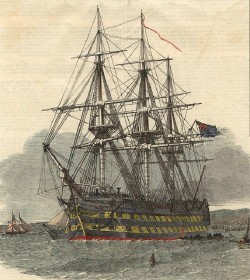
Featured image: By Richard Rixon, 1841 – Saint, A., Guillery, P. (ed.), Woolwich – Survey of London, Volume 48, p. 60. Yale Books, London, 2012. ISBN 978 0 300 18722 9, Public Domain.

2021 Addendum – My New Blog

In 2021 I established a research blog to document all my research about the mysterious George, called ‘Finding George Courtney c1841’. Use the buttons below to view a ‘Research Summary’ page detailing all my genealogical and genetic research to date, or go to the ‘All Blog Posts’ page for a chronological list of blogposts to date.

Stephen Cassidy or ‘Captain Rock’? My 3rd Great Grandfather.

The Australian Context

My fascination for the Cassidy’s probably stems from the fact I was always told told by my grandmother Mona Murphy Roberts that I was like her mother Rebecca.  She used to say I was the only one of her grandchildren that could sing the Irish songs, even though my mother used to protest that I was the least Irish of all her grandchildren. When I started doing family history in earnest in 2006 I was very surprised to find that I was actually a fourth generation Australian on my mothers side! My grandmother and all her relations used to proudly say that they were Irish.  Well they were, but their ancestors had been in Australia since the early 1800’s! My great grandmother Rebecca Cassidy was born in Australia in 1852, she reputedly rode sidesaddle and was considered the finest horsewoman in the New England district.  That wasn’t a skill I inherited but it could explain my canny luck with the horses!  

Rebecca CASSIDY c 1880
Rebecca c1880

It was always said in Mum’s family that the Cassidy’s were holier than the Pope.  The Murphy side, were supposedly the black sheep and scallywags!  Not surprising as Rebeccas first cousin Phillip Cassidy (1848-1922) was recognised as the first ‘Australian Born’ ordained priest (aka Brother Melitus).  He reached the status of Venerable Archdeacon (from what I’ve read, that is only two levels away from being made a saint!).  His work with the Australian Indigenous population in the small town of Moyura in Southern New South Wales was particularly of note.  There were many others who took up religious professions on the Cassidy side of the family, including Phillips sister Catherine – the first ‘Australia Born’ postulant of the Good Samaritans, who designed the ceiling of the Rosebank Chapel at Five Dock.

CASSIDY Phillip Catholic Weekley 1922
Phillip Cassidy

Who would have thought they were of convict stock!  It was through the association of Rebecca and Phillip that we were first able to trace the family connection, their fathers Thomas and Phillip being brothers.  My third cousin Marnie, a Cassidy descendant, later sourced a book written by Father Peter Klein about the ecclesiastical life of Father Phillip Cassidy. In the first chapter he talks about the Cassidy’s roots in Ireland and suggests they came to Australia as early farming pioneers.  In reality they were convicts, now proudly referred to in Australia as ‘Australia Royalty’.

Crime and Punishment

The Cassidy brothers, Thomas, Phillip and Edward were convicted and transported for life, for reputedly throwing a horse over the precipice at Cullaigh, Belmore Mountain, Fermanagh.

Screenshot 2017-06-27 15.29.19
Courtesy Boho Heritage Organisation

They were sent to Australia on board the Hercules II in 1830. Whilst their father Stephen was also charged, he obtained a reprieve on account of his age and newspaper reports suggest he was to be imprisoned for 2 years, whilst his 3 sons were transported for life. It seems odd that he was not transported along with his sons, as many persons of advanced years were.  What became of him remains a mystery.

Hercules II 1830
Hercules II 1830

In about 1874 Peter Magennis wrote a story that included information about Stephen that was published in the Lisbellaw Gazette 1879-89 called ‘The Treasurer, A Story of the Great Irish Famine’.  This series was kindly given to me by local historian Seamus MacAnnaidh in 2009. Whilst the work is a mix of fact and fiction Magennis indicates Stephen was probably over 70 years of age in 1835, so he may have been born as early as 1765, he also says Stephen had a large family.  Stephen is described as a senarchy (sennachie) which is understood to mean ‘one occupied in the study of traditional history, genealogy and legend’.   Magennis suggests he was the best senarchy and historian in the country.

Secret Societies?

We don’t know much about Stephen Cassidy (52Ancestors#2).  In Father Kleins book it says he was based with the military at the garrison in Fermanagh in the North of Ireland and was referred to as ‘an outstanding young catholic captain‘.  We now know that Stephen was from Boho, near Enniskillen and lived in the townland of Gortgall, where there is a nearby village called Garrison.  As a Catholic, it seems unlikely that Stephen would have been a captain in the British Army and it is more likely that the term ‘captain’ may have been a nickname.

The 1820’s were a turbulent time in Ireland with many disputes between landlords and tenants. Protestants and Catholics. The Cassidys had been evicted from their land in 1826.  Catholic Emancipation being finally gained by 1829.

500px-CASSIDY_-_A_collection_of_source_material-10

A number of newspaper references suggest that Stephens landlord Reverend Andrew Clarke wanted the Cassidy’s ‘out of the country’ (the inference being transportation) and that there had been previous litigation between the Cassidys and Clarke.  It was also implied that the local prosecutor Henry Fausett may have been offered money to prosecute the Cassidy’s.

One newspaper article in 1828 reports that Stephen and his son Thomas (my second great grandfather) were charged with making threats and menacing James McCourt of Upper Gortgall, near Garrison on 7th April 1828.  McCourt was the new tenant now residing on their old land, having lived there for about a year.   The evidence suggests that McCourt believed the intruders to be the Cassidy’s, also stating there were references to the murder of Dominic Noone and that the intruder making the threats referred to himself as ‘Captain Rock’, known to be the leader of the local group of Ribbonmen. The Ribbonmen were an agrarian secret society, their objective to prevent landlords from changing or evicting their tenants.  Whilst McCourt stated he didn’t see the intruders he said he had previously chased ‘Captain Rock’ and knew his voice.  The court returned a verdict of not guilty for both Stephen and Thomas, but could this be the reason Stephen was known as the outstanding young ‘Captain’?   There is a lot more information about the Ribbonmen and the murder of Dominic Noone at Derrygonnelly in Peter Magennis’ earlier  book ‘The Ribbon Informer’, but Stephen Cassidy is not mentioned by name in that account.

Impression of Ribbonism meeting

Later in July 1829, around the time of Orangeman’s Day there was an incident that is well known in Irish sectarian history, known as the Macken Fight. The persons involved in the incident were tried on the same day as the Cassidy brothers and also transported to Australia on the Hercules II in 1830.  Whilst our Cassidy’s were not named as being involved, there was a Hugh CASSIDY named in some reports but he was not among those finally charged and I have yet to identify him.

It was somewhere between 9-12 September 1829 when the horse owned by Andrew Whaley (a protestant tenant) was driven off the lands of Upper Gortgall, near Moyleat, Belmore Mountain into the precipice. References differ about the date but most suggest it was the night before the Enniskillen Fair, probably 10 September.  The Cassidys were charged, the Belfast News reporting on 22nd Sep 1829 the exact location of incident on Upper Gortgall lands and the effects on the horse. The report also suggested there had been many ‘degradations’ over the last few years since the Cassidy’s were ejected from their lands. Thomas may have been living at Tobradan by this time.  At the trial,  Stephen refers to Andy Flanagan, concerned about what had happened to him.  I have been unable to determine whether there is any significance in this comment?

Screenshot 2017-10-30 18.33.27.png

Could the events at Macken and the charges against the Cassidys be linked?  The Cassidys continued to claim their innocence over the horse incident.   If Stephen was involved with the Ribbonmen and was their leader it does seem probable that he may also have been connected to the events at Macken.  Was Reverend Andrew Clarke instrumental in bringing into play his desire to see the Cassidy’s deported?

Where Stephen was imprisioned remains a mystery.  I have been unable to source any relevant gaol records, or find a death record.  However, given his age Stephen would have died before civil registration was introduced in Ireland.

The  ‘extended’ Cassidy Family

Stephen was married to Catherine Britton, the daughter of an Anglican clergyman, who had abandoned her faith and become a Catholic when she married Stephen, which at the time would have been known as a ‘mixed’ marriage.  To date, we know the couple had at least three sons, but it is suspected that the family would have had many more children as Peter Magennis also suggests.

Screenshot 2017-10-30 15.41.20

Several other potential family members Cassidy’s have been identified during this research.  Could they be connected to our family?  If anyone out there has information to share,  I would love to hear from you.

  • Pat Carron was uncle to Andrew and Catherine Cassidy.  He was transported on Hercules II in 1830 for his involvement at Macken, he may be the same person who was involved at Inismore riot in 1824.
  • James Keenan was also transported in 1830 on Hercules II for his involvement at Macken.  His wife was named Mary Cassidy, they had a daughter Ann, both of whom remained in Ireland due to Marys ill health.
  • Patrick Cassidy born c1790, m Mary McCaffery  The Derrygonnelly Cassidy article by Janet Cassidy-Strop, outlines more detail.  The geographic closeness of Patrick is of particular interest as well as the suggestion of the family’s involvement in Ribbonism.
  • Hugh Cassidy involved in the events at Macken.  Hugh Cassidy born 1827 is too young to be the Hugh Cassidy suggested as being involved in the events at Macken, but perhaps his father Owen Cassidy born abt 1788, also from Derrygonnelly, may have had a brother Hugh?  Could Owen be connected to Patrick? Or, perhaps our Stephen might also have another son or brother named Hugh?  
  • Stephens son Thomas Cassidy was also said to have left a wife in Ireland with two daughters.  No application was made for her to join him in Australia so perhaps she may have died soon after Thomas’ transportation?
  • John Cassidy is listed in Griffiths Valuation in 1859 at Tobradan where Thomas Cassidy previously rented lands before his transportation.  John is married to a Margaret Maguire, John’s father is probably named Patrick.  They have a son Owen, who married Margaret Wynne.  Also living in Tobradan townland at that time is another James Keenan.
  • There are also number connections to the McManus family, including several involved at Macken, however it is quite a common name.

The Y-DNA story

In late 2010 I became interested in DNA testing soon afterwards I began looking for a male CASSIDY to help me confirm the CASSIDY line back to Ireland.  Enter Des Cassidy my third cousin!  He did an autosomal test for me in 2012. I soon followed that up with a Y-DNA test in 2013, looking for our extended Cassidy line back in Ireland. We had no Y-DNA matches for the first two years – none at all, not even at 12 markers!  It wasn’t until 2014 that we got our very first Y-DNA match, we had to upgrade to 67 markers to finally get it!  A Cassidy from the USA who listed his oldest known ancestor as Patrick, that’s all, no years, no locations and uncontactable.  How frustrating!

By 2016 Oliver Cassidy from Ireland tested, his ancestor Owen lived at Coolarkan a short distance from Stephen at Gortgall and we thought perhaps they may have been brothers.  Oliver matched both Des and our US Cassidy at 67 markers and whilst the matches suggest a patrilineal relationship, it is more likely that Stephen and Owen were cousins when you look at the genetic distances of the two matches.  With the help of another US Cassidy descendant Don, a 4th cousin once removed, we were able to trace the ancestors of our mysterious match, identifying his oldest ancestor as James Cassidy 1861-1840 from Derryrealt Cavan, very close to the border of Fermanagh.  I suspect James was the son of the Thomas Cassidy from Drumcask, Cavan who was listed in Griffiths Valuation in 1859, his wife Mary McManus.  As can be seen on the map below, the places where all three ancestors lived is quite close, particularly Owen and Stephen, with Thomas not too far away at 25 kilometres.

Screenshot 2017-11-08 09.48.45

Autosomal DNA

It was autosomal DNA tests that gave us the breakthrough we were looking for to confirm our relationships back to Stephen.  Des’ initial autosomal test confirmed the relationship of our family back to Thomas and Mary Cassidy our Australian convict ancestor, but it wasn’t until early this year that we managed to get back to Ireland.

Earlier in the year we confirmed the relationship of our family back through another son of the Cassidy family, James.  An X chromosome match with my US cousin Don, enabled us to confirm Stephens wife as being Catherine ‘Kitty’ Britton.  To read more about how we identified Kitty through DNA and our relationship through her son James, please refer to my earlier blog post, by clicking here.  It’s a long story and for another post, but I have long wondered whether this James is actually Edward, one of the three brothers transported to Australia, who escaped the colony in 1833 and was said to have gone to the United States.

Leaving that aside, we now have autosomal results from descendants of Thomas, Phillip and James that confirm the three brothers are all from the same family.  We have no less than five triangulated segments and two more on the way!  Chromosomes 1, 4 and 21 are the only ones that triangulates all three brothers, but we are close on the others as you can see.  These segments must be coming from the ancestral couple of Stephen Cassidy and Catherine Britton.  It might take some time to unravel which segments belong to which side of the family but its a great start!

Screenshot 2017-11-08 11.54.53

Whilst I am currently aware of 13 DNA testers whose ancestry can be traced back to Stephen and his wife Catherine there must be more out there. We know the brothers had at least 33 children between them, potentially more if we could identify more siblings.  Unfortunately so far, the descendants of Stephen do not share any autosomal DNA with either of our Y-DNA matches, but that is not surprising given that those genetic relationships may be much further back in time.  However, you never know what new tests might reveal.  If you have tested your DNA and think you might be related to this family, please let me know.  I would love to compare results, but results need to be uploaded to GEDmatch for comparison.  The chart below outlines our new possible family, taking into account ‘possible’ relationships based on Y-DNA testings!

Screenshot 2017-10-30 23.48.34.png

The Clan Gathering – July 2017

It was a great thrill on our trip to Ireland in July this year to actually stand on the spot near Eagles Knoll on Belmore Mountain where the horse was reputedly thrown from the precipice after my many years of researching the Cassidy story.  Special thanks must go to the efforts of a lot of people from the Boho Heritage Organisation, especially my ‘predicted’ 4th cousin once removed cousin Oliver Cassidy.  It was a delight to finally meet Oliver and his family.  It doesn’t look like much of a precipice in this photo, but take a look at the surprise BBC coverage of the event here.

At the Cassidy Clan Gathering I was appointed to the Executive Committee as the DNA officer.  I hope to be able to assist members to connect with other Cassidy’s around the world.  If you are a Cassidy and have tested your DNA please join our Facebook group.

IMG_0105
Our newly formed Cassidy ‘cousin’ Clan – Oliver, Magdalan, Des, Donna and Veronica

You can read more about the Clan Gathering at both the Cassidy Clan website and in my private travel blog rayver33 – Here and There.  If you need access, just ask.

As always, if you can help me expand my research please do not hesitate to contact me via this blog or via private message at Wikitree.

References

  1. Belfast Newsletter, 6 April 1830.  Indicates transportation for life. Identical article in Enniskillen Chronicle and Erne Packet, 6 Apr 1830, p4.  Identical article in Impartial Reporter, Apr 1830.
  2. Enniskillen Chronicle and Erne Packet, 31 July 1828, p1.
  3. Excerpt from Rituals and riots: sectarian violence and political culture in Ulster, 1784-1886 By Sean Farrell.
  4. Belfast News 22nd Sep 1829, p4.
  5. Most of the sources for my Cassidy research have been published on Wikitree and can be found here.